Citrus by-products: from peel to added value
Roughly half the fruit never ends up in the juice. Well used, peel, pulp and oils can change the economics of a plant.
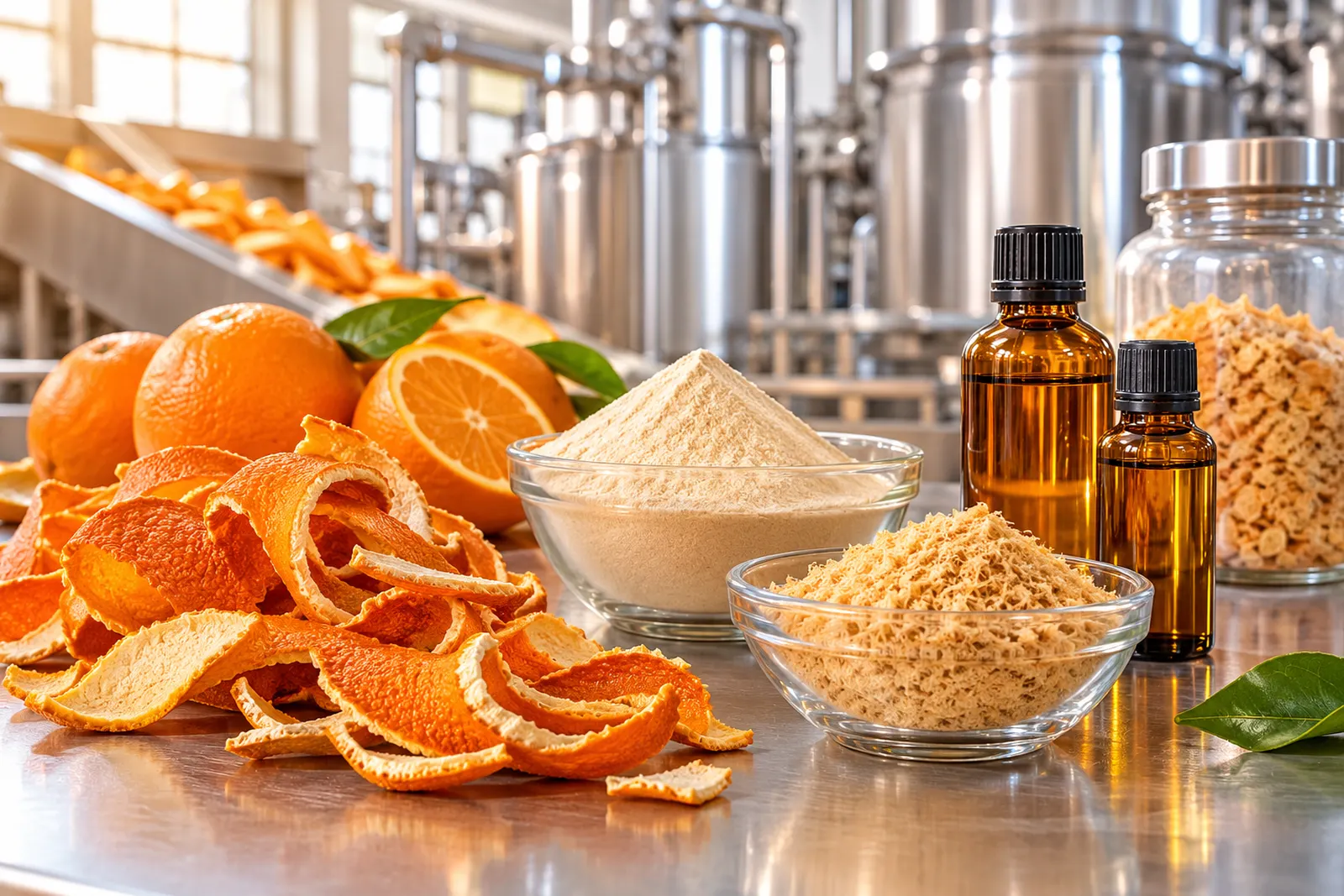
When an orange is processed into juice, roughly half its weight remains as peel, membranes and seeds. Long seen as costly waste, these by-products are now a source of revenue, provided they are handled from the moment of extraction.
Essential oil and d-limonene
Peel oil is recovered during extraction, then separated by centrifuging and dewaxed by chilling. It is sought after for flavours and fragrances. D-limonene, its main component, is also used as a natural solvent and in cleaning products.
Pulp cells and fibre
Pulp cells recovered at the finisher are pasteurised and frozen or stored aseptically, then added back to 'with pulp' juices and drinks. Citrus fibre, made from peel, is used for texture and water binding in the food industry and meets demand for clean-label ingredients.
Pectin
Citrus peel, rich in pectin, is a major raw material for pectin producers. It must be washed and dried quickly after extraction to keep its quality, which requires the right logistics and dryer.
Animal feed, molasses and energy
- Dried citrus pulp pellets: an energy-rich feed valued by ruminant farmers
- Citrus molasses from peel press liquor, used in feed or fermentation
- Anaerobic digestion of residues: possible, but limonene inhibits digestion and must be reduced first
- Composting for volumes that cannot be used otherwise
Building the project
The right choice depends on volumes, seasonality, local outlets and the cost of energy for drying. We carry out feasibility studies, size the workshops and help find partners for these routes.