Orange juice: the technologies changing processing in 2026
From extractor to aseptic drum, the orange juice line has moved on a lot. An overview of the technologies that really matter for a Moroccan plant.
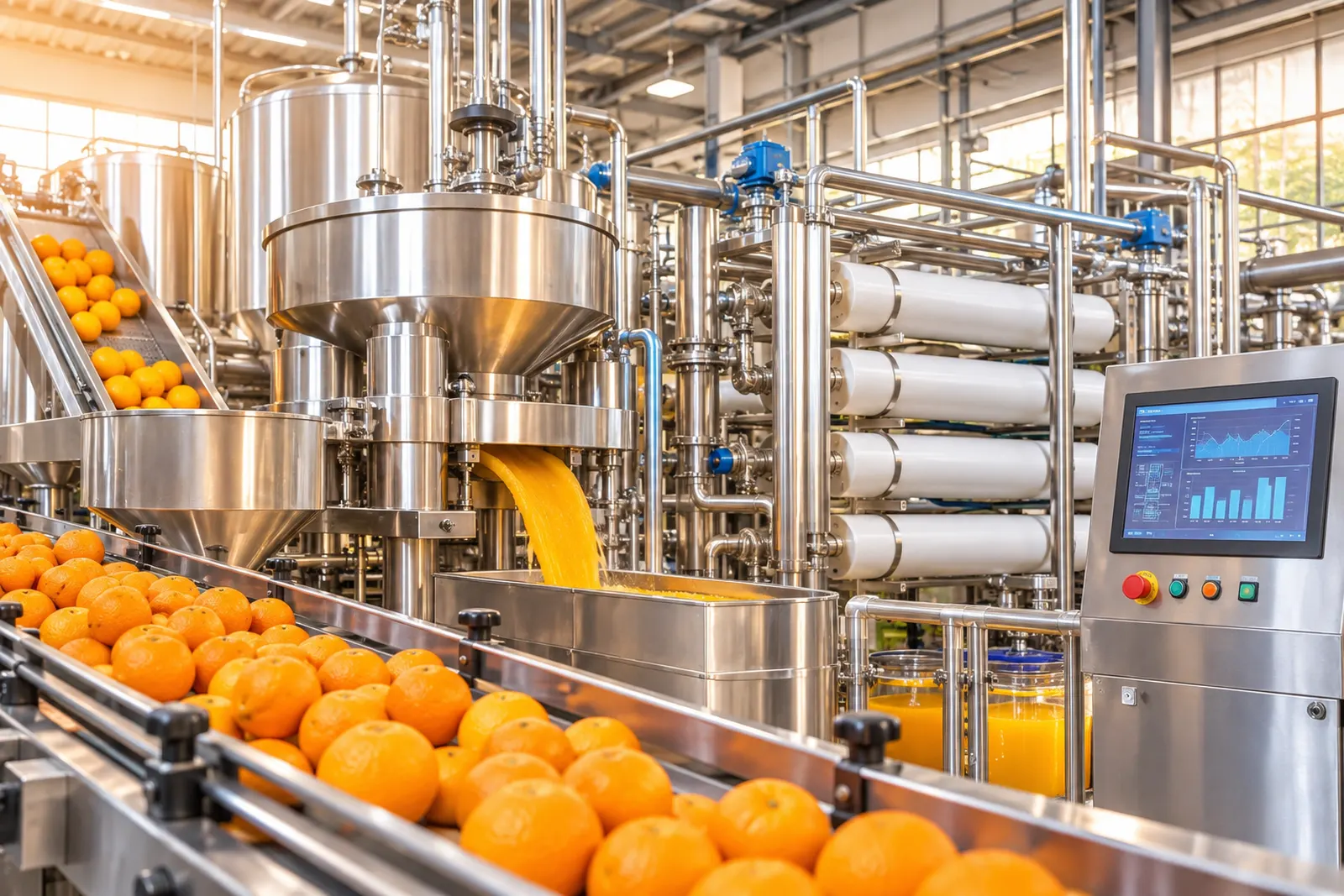
The layout of an orange juice plant has not fundamentally changed in thirty years: receiving, extraction, finishing, heat treatment, then storage as NFC juice or concentration to FCOJ. What has changed is how each step is done: more measurement, less energy, less water and better aroma retention.
Extraction: recover more, damage less
Cup-type extractors remain the reference because they separate juice, pulp, seeds and peel oil in a single operation. Recent machines add automatic settings by fruit size and per-extractor yield tracking. A few points of yield over a season is hundreds of tonnes of juice, so accurate fruit sizing upstream is still the best-paying investment.
Finishing, pulp and debittering
Screw or paddle finishers with speed and pressure control give fine control of pulp content. For varieties prone to delayed bitterness (some Navels, for example), debittering on adsorbent resins reduces limonin without spoiling the juice. Recovered pulp cells are increasingly sold as an ingredient in their own right.
Membrane filtration
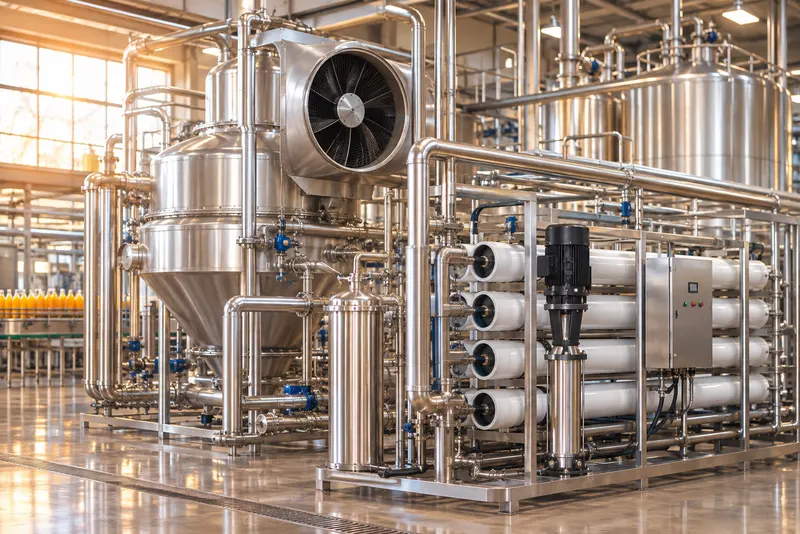
Cross-flow ultrafiltration is steadily replacing conventional clarification for clear juices and pulp-wash treatment. It gives a more consistent product without filter aids and fits well into an automated line. Reverse osmosis is used to pre-concentrate juice ahead of the evaporator (see our article on energy).
Treatment: optimised thermal or non-thermal
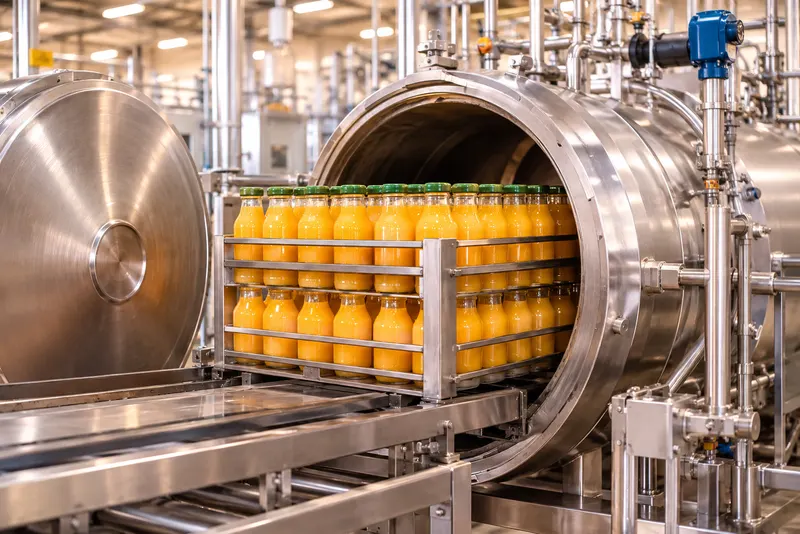
Pasteurisation is still needed to inactivate pectin methylesterase, which causes cloud loss. Modern heat exchangers recover much of the heat and shorten the time spent at high temperature. For premium NFC, non-thermal processes such as high pressure (HPP) and pulsed electric fields (PEF) are gaining ground, with their cold-chain constraints.
Evaporation and aroma recovery
Multi-effect TASTE evaporators dominate FCOJ production. The strong trends are mechanical vapour recompression (MVR), which replaces part of the steam with electricity, and more thorough aroma recovery (aqueous and oil essences) that is added back at reconstitution.
Inline measurement and control
Inline Brix refractometers, mass flow meters, residual oil measurement, conductivity sensors on cleaning circuits: a modern line continuously measures what used to be checked once a shift in the lab. Connected to a supervision system, this lets you track yield, OEE and energy per tonne of fruit in real time.
Where to start?
- Measure real yield per extractor and per fruit lot
- Run an energy and steam balance on the evaporator and pasteurisers
- Assess pre-concentration by reverse osmosis
- Look at by-products: peel oil, cells, peel
- Prepare for buyer requirements: FSSC 22000, AIJN code