Aseptic orange juice: the technologies from orchard to bottle
Orange juice that is shelf-stable, preservative-free and still tastes of fruit: that is what the aseptic chain is for. Step by step, what has changed from the orchard to the cap.
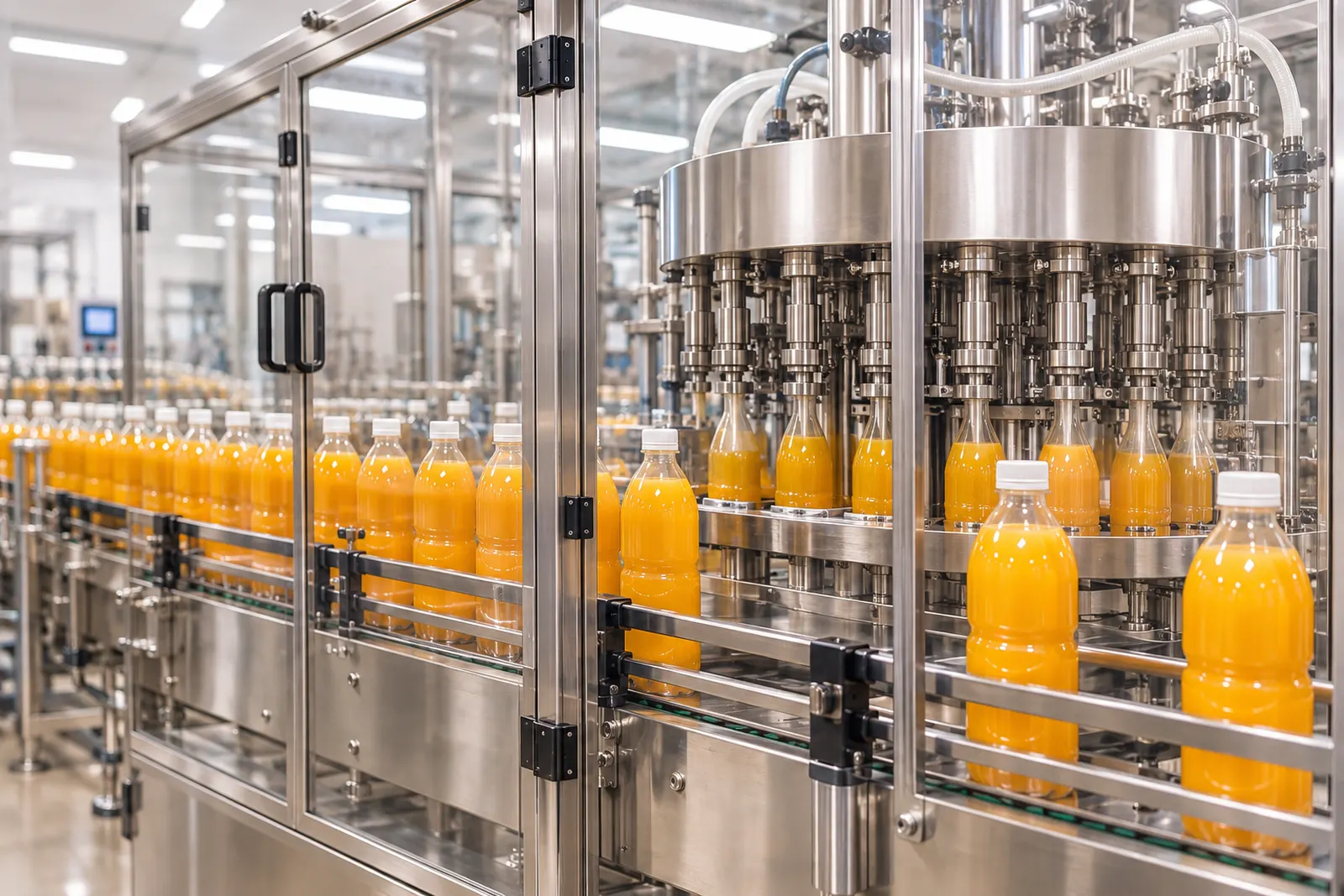
Aseptic packaging means filling a product that has been heat-treated and cooled into packaging sterilised separately, inside a sterile zone. The juice is not reheated in its bottle, which protects colour, aroma and vitamin C. But final quality is decided long before the filler: it starts in the orchard.
1. Harvest: picking at the right time
Harvest timing is set by the sugar/acid ratio (Brix/acid), which decides the balance of taste. Growers now track ripeness plot by plot with handheld refractometers, scheduled lab analysis and, increasingly, satellite or drone data on orchard condition.
- Harvest into clean bins or trailers, kept out of the sun
- Plot-level traceability from loading (labels, QR codes)
- Short delay between picking and extraction: fruit left waiting ferments and deteriorates
- Mechanical harvest aids (shakers, platforms) for large juice volumes
2. Receiving and sorting: vision for quality
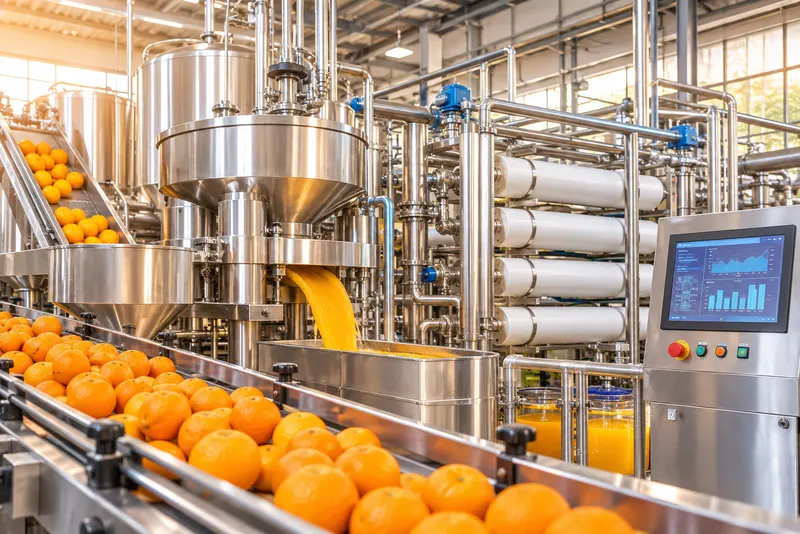
At the plant every lot is sampled for Brix, acidity and juice yield. AI-driven optical sorters remove rotten, damaged or off-size fruit at high speed. Some lines add near-infrared (NIR) spectroscopy to estimate internal quality without cutting the fruit. A single rotten fruit that gets through can be enough to contaminate a whole batch of juice, notably with moulds and patulin.
3. Washing and disinfection
Fruit is brushed and washed in disinfected water, often with peracetic acid or controlled chlorine. Recent installations recycle wash water with filtration and automatic disinfectant dosing, measured continuously. Less water and consistent disinfection: it is also a key point in the HACCP plan.
4. Extraction, finishing and de-aeration
Cup-type extractors separate juice, pulp and peel oil in one operation, limiting bitter oil carry-over into the juice. Finishers set the pulp content. Then comes vacuum de-aeration: removing dissolved oxygen protects vitamin C and colour for the whole shelf life. Inline dissolved-oxygen sensors let you check this continuously.
5. Heat treatment
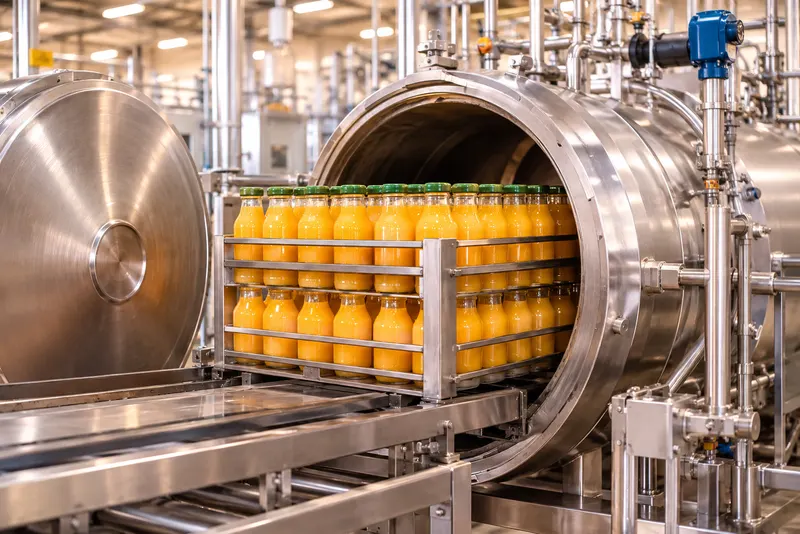
The juice is pasteurised in a plate or tubular heat exchanger at high temperature for a short time. There are two aims: kill yeasts, moulds and spoilage bacteria, and inactivate pectin methylesterase, the enzyme that makes the cloud settle. Particular attention goes to Alicyclobacillus, an acid-loving spore-forming bacterium that can spoil juice (a medicinal off-taste); controlling it depends mostly on fruit quality and washing.
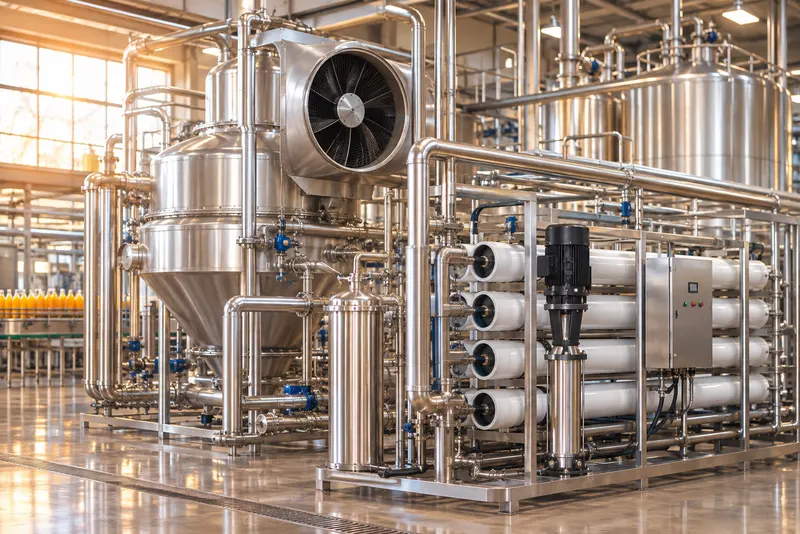
Modern exchangers recover much of the heat to preheat incoming juice, then cool the product quickly, always in a closed sterile circuit downstream of the holding tube.
6. Aseptic storage
For NFC juice produced over a season of a few months but sold all year round, storage is strategic. Two solutions dominate:
- Large chilled aseptic tanks, steam-sterilised, with a sterile gas (nitrogen) headspace to limit oxidation
- Aseptic bag-in-drum or bag-in-box: sterilised bags filled through a sterile filling head, easy to ship for export
Running these stores relies on sterilisation in place (SIP) of tanks and lines, automatic recording of temperatures and pressures, and regular microbiological checks.
7. Aseptic filling
This is where change is most visible. Filling takes place in an isolator: a closed enclosure kept at positive pressure with sterile filtered air, where no operator intervenes directly. Packaging is sterilised there just before filling.
- Carton: packaging web sterilised with hydrogen peroxide, formed and sealed in the sterile zone
- PET bottles: preforms or bottles sterilised with vaporised hydrogen peroxide or peracetic acid
- 'Dry' preform sterilisation before blowing: less water, fewer chemicals and lighter bottles
- Electron-beam (e-beam) sterilisation of preforms and caps: chemical-free and gaining ground fast
- Caps sterilised in the same zone, then applied immediately
Cold aseptic filling allows light PET bottles instead of the thicker bottles that hot-filling requires. It cuts plastic and energy use and keeps the juice's taste better.
8. Control, validation and traceability
An aseptic line is validated, then monitored continuously. Media-fill trials, packaging sterilisation tests with biological indicators and environmental monitoring of the sterile zone prove it works. In production, cameras check fill level, capping and coding; samples are incubated before batches are released.
All data (pasteurisation temperatures, sterilant concentrations, isolator pressures, cleaning cycles) is recorded and linked to the batch number, so a batch can be traced back to the orchard plot.
What we bring
- Feasibility study and choice between hot-fill, aseptic PET or carton
- Specifications, supplier selection and installation follow-up
- Line validation: pasteurisation, sterilisation, filling trials
- HACCP plan, preparation for FSSC 22000 and BRCGS certification
- Preventive maintenance of critical equipment and team training