Industry 4.0 in food processing: what actually works
Sensors, AI, predictive maintenance: plenty of promises. Here is what brings concrete results in a food plant, and in what order to put it in place.
Industry 4.0 is often presented as a big IT project. In a food plant, the best results come instead from small steps, built on reliable data and on teams who know how to use it.
1. Measure OEE automatically
Overall equipment effectiveness (OEE) is the basic indicator. Collecting it automatically on bottleneck machines (filler, oven, bagger), with stop reasons entered by operators, gives a clear picture of losses within weeks. It is the foundation for everything else.
2. Predictive maintenance
Vibration and temperature sensors on motors, pumps, gearboxes and fans detect deterioration before a breakdown. Combined with a solid preventive maintenance plan, they cut unplanned stops, which are especially costly mid-season.
3. AI vision
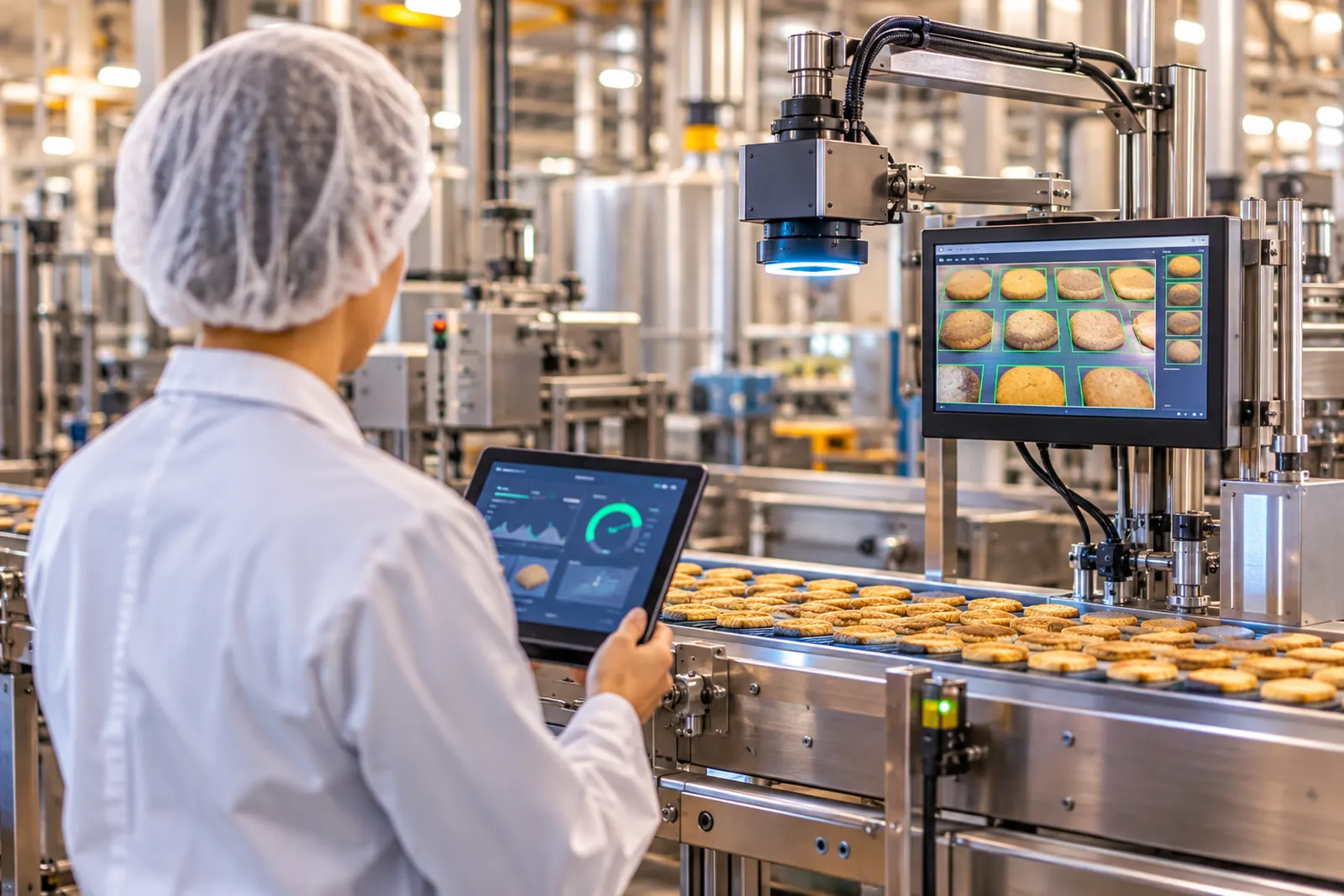
AI-driven optical sorters recognise defects in fruit, grain or finished products with an accuracy that is hard to match by eye. At the end of the line, cameras check labels, batch coding and fill levels. Payback is often quick where manual sorting takes a lot of staff.
4. Digital quality and traceability
- HACCP records entered on tablets instead of paper
- Lot traceability from raw material to finished product in minutes
- Automatic alerts when a critical parameter goes out of limits
- Easier preparation for FSSC 22000, BRCGS or IFS audits
5. Digital twins
A digital model of the line lets you test a new format, a new speed or a change in organisation before doing it for real. It is most useful for extensions and new plants, when choices are cheapest to change.
In what order?
- Start with a pilot line and one simple indicator (OEE)
- Train teams to read and use the data every day
- Add predictive maintenance on critical equipment
- Roll out to other lines, then connect quality and traceability
- Consider AI and digital twins once the basics are solid